Article based on video by
Crypto LLC’s 10MW Bitcoin mining site in North Dakota, powered by stranded gas on oil pads, nears launch after all 10 containers arrived. With 4.5¢/kWh hosting rates and >10MW expansions ready, this setup slashes costs and deployment times for ASIC operators.
📺 Watch the Original Video
What Happened: Crypto LLC’s 10MW Stranded Gas Deployment
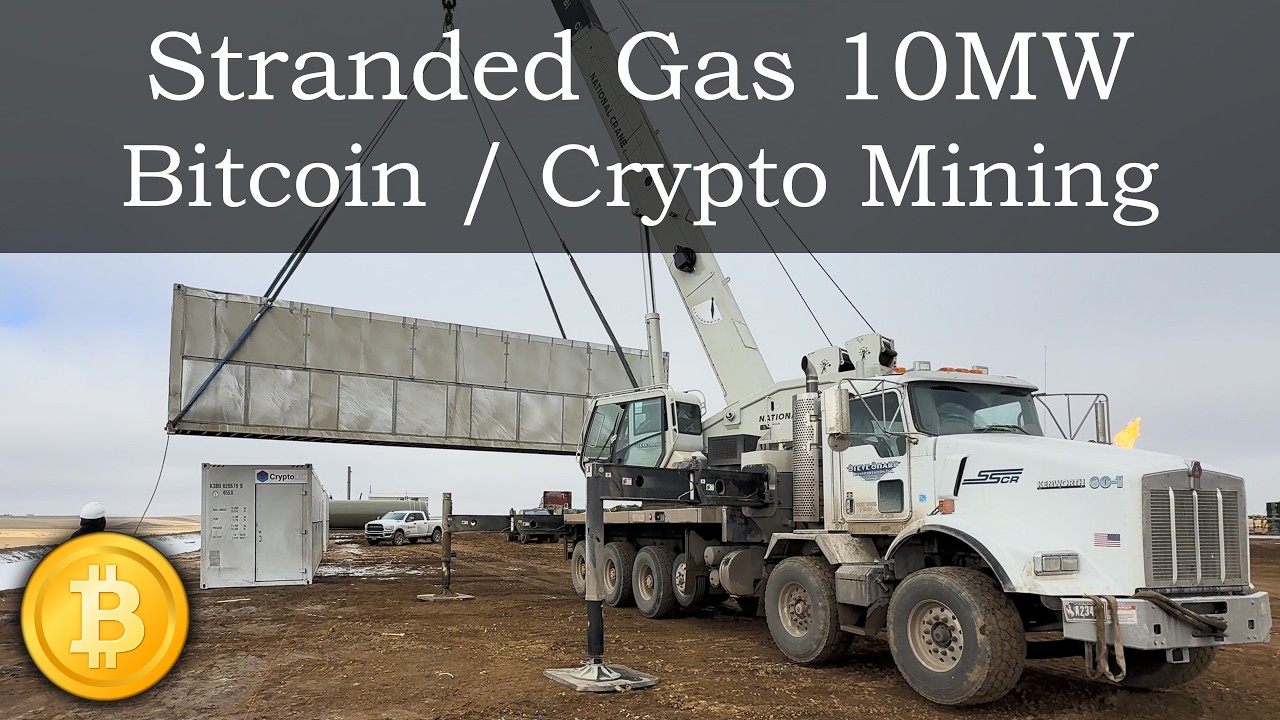
Crypto LLC delivered all 10 containers for its 10MW Bitcoin mining stranded gas setup across two North Dakota oil/gas pads.[1][2][3] Units sit prepped for filter build-out and genset hookups, eyeing operational status soon.[1][2][3]
Target was mining by April 1st with a 4-6MW initial ramp-up.[1][2] But as of mid-April 2026 updates, it’s slipped—though energization looks imminent with gensets, pipelines, and filters aligning.[3][6]
This builds on their January 2026 8MW site launch using eight containers, showing Crypto LLC’s quick North Dakota push.[8][10]
Modular design shines: one panel per genset maximizes uptime, custom Vnish firmware squeezes extra efficiency from rigs, and zero setup fees keep costs lean.[1][2]
Power runs at 4.5¢/kWh all-in for two available panels from the 10MW—beats standard US hosting at 7.5¢/kWh.[1][2] Low-power mode fits older ASICs too.[1]
Stranded gas from pads cuts deploy time to ~4 months, dodging slow county permits.[1][2][7] And they’ve got >10MW more queued in Texas/North Dakota for 1-100MW data centers.[1][5][6]
This is bullish for hashrate chasers post-halving. Ultra-low costs and turnkey scale give BTC miners a real edge amid high US power bills—watch for live hashrate adds any day.[1][2][6]
Why It Matters: Infrastructure Deep Dive on Stranded Gas Mining
Stranded gas from North Dakota oil pads powers Bitcoin (BTC) mining at Crypto LLC’s 10MW site, turning flared methane into cheap electricity for ASICs.[1][2][6] This setup uses 10 containers already on-site, with pipelines, filters, and gensets prepped for a 4-month deployment—half the time of traditional sites needing county approvals.[1][7]
Costs hit 4.5¢/kWh all-in for two available panels, crushing the US average of 7.5¢/kWh.[1] Older miners run in low-power mode here, dodging high electricity bills that kill margins elsewhere.[1][2]
And >10MW more scales up in Texas and North Dakota for 1-100MW data centers—no init fees, no firmware hassles, just plug in with custom Vnish firmware for efficiency gains.[1][6]
Bullish for hashrate post-halving: April 1st ops target slipped to now-imminent energization, per April 12 updates.[6] Crypto LLC’s prior 8MW site went live January 13, 2026—doubling down fast.[6]
This edges out grid-dependent hosts. Stranded gas monetizes waste at $12 per thousand cubic feet vs. $3 piped, per oilfield math.[3] ExxonMobil and Giga prove it scales.[3]
Buy the dip on miners if you’re hosting—fee-free ops lower barriers for retail stacks. Watch Crypto LLC for Texas hashrate confirms; this infrastructure play crushes legacy power costs long-term.[1][4]
Hosting Opportunity: Cost Edges and Scalability for Miners
Crypto LLC offers two panels at 4.5¢/kWh all-in, including management—beats standard US hosting at 7.5¢/kWh.[1][2] Post-halving, this edge locks in profitability for Bitcoin (BTC) ASICs. Older miners run in low-power mode with custom Vnish firmware for extra efficiency, no init or setup fees.[2]
Their 10MW North Dakota site uses stranded gas on oil pads—10 containers arrived, prepped for filters and gensets.[1][2][6] Targets April 1st ops, but as of now, energization imminent. Setup hits ~4 months vs. 6+ traditional, skipping county delays.[1][7]
>10MW extra capacity in Texas/North Dakota scales 1-100MW custom data centers.[1][2] Texas sites already hum at 3MW with 5.9¢/kWh rates, powered by cheap grid energy.[1] No firmware fees sweeten turnkey deployment.
Stranded gas flips costs: turns $62,500 annual flaring waste into mining profits, like ExxonMobil/Crusoe plays.[4][5] Modular setups skip pipelines, deploy anywhere gas flares, cut emissions 90%+ vs. burn-off.[4][6]
This is bullish for hashrate hunters—4.5¢/kWh crushes US averages, positions for halving squeeze. Retail or institutional, grab panels now; monitor Crypto LLC for Texas ramps and hashrate proof.[1][2][6] April miss? Still faster than peers, watch Q2 hashrate spike.
Market Implications: Efficiency Gains in US Bitcoin Mining
Crypto LLC nails a massive edge with ultra-low 4.5¢/kWh all-in power on stranded gas in North Dakota. This crushes grid-tied ops averaging 7.5¢/kWh across US hosting, especially post-halving where block rewards dropped to 3.125 BTC amid soaring network difficulty[1][3][5]. Fewer than 10 large stranded gas miners operate in North America, locking in scarcity for this cost killer[5].
Positions them perfectly for the institutional and retail hosting surge. Buy/sell miners flow competitively, with no init fees, firmware installs, or setups—plus custom Vnish firmware juices efficiency on older ASICs[1]. Their 10MW site hits ops soon after April 1st miss, with >10MW more queued in Texas/North Dakota for 1-100MW scales[1].
Broader trend screams bullish: oil giants like Equinor and Enerplus ink gas-to-BTC deals, spawning rural jobs and steady revenue while flaring drops[4][5]. Rapid 4-month deploys on oil pads dodge 6+ month county red tape[1].
This is bullish because post-halving math favors low-cost ASICs. US Bitcoin mining grabbed 37.8% global share by 2022, now leaning on flexible loads like ERCOT’s program for peak curtailment[1]. Stranded gas ops thrive as difficulty climbs—$20M daily BTC mined network-wide keeps pros profitable at scale[3].
Retail gets in via low-power hosting modes. Watch Crypto LLC for Texas hashrate ramps; efficiency here outpaces hydro-cooled leaders like S21 XP Hydro on pure OpEx[4]. Margin edge holds even if BTC dips from $95k peaks[4].
What to Watch: Next Steps and Expansion Signals
Crypto LLC missed its April 1st target for the 10MW Bitcoin mining site in North Dakota, but energization looks imminent per the April 12 update. All 10 containers are on-site with gensets prepped—hashrate confirmation could hit any day now[3]. This keeps post-halving positioning intact for BTC miners chasing efficiency.
Track Texas and North Dakota expansions adding >10MW capacity, plus the 2nd gas pad for 1-100MW custom builds. Stranded gas setups slash deployment to 4 months vs. 6+ traditionally, dodging county red tape[1][2]. Recent 8MW site launch by January 13 sets up 2x more sites soon.
Vnish firmware and low-power hosting give miner efficiency edges over rivals like Crusoe Energy. All-in rates at 4.5¢/kWh beat USA averages of 7.5¢/kWh, with no init or setup fees—bullish for older ASICs[2][5]. This cost edge favors smaller operators in fee-free ops.
Risks loom on deployment delays and gas supply hiccups, but opportunities shine for retail scaling. Watch Crypto LLC’s channel for Texas rollout signals. Imminent hashrate online screams bullish on stranded gas hashrate growth[1][4].
Frequently Asked Questions
What is stranded gas Bitcoin mining in North Dakota?
Stranded gas Bitcoin mining in North Dakota captures excess natural gas from oil pads—typically flared as waste—and converts it into electricity to power ASIC miners. Crypto LLC deploys containerized 8MW and 10MW sites directly on these pads, slashing setup to 4 months versus 6+ for traditional sites.[2][5][6] This approach cuts emissions and monetizes gas worth $12 per thousand cubic feet daily.[4]
How much does Crypto LLC charge for 10MW site hosting?
Crypto LLC charges 4.5¢/kWh all-in, including management, for 2 available panels from their North Dakota 10MW site. General US hosting runs at 7.5¢/kWh, with options for low-power mode on older miners and custom Vnish firmware for efficiency gains.[1][5]
When will Crypto LLC’s 10MW stranded gas mine go live?
Crypto LLC’s 10MW site in North Dakota targets operational mining by April 1, 2026, with all 10 containers arrived, prepped for filters and genset connections. Their prior 8MW site launched by January 13, 2026, after passing inspections.[1][2][5][6]
What are the benefits of mining Bitcoin on oil pad stranded gas?
Mining on oil pad stranded gas delivers ultra-low 4.5¢/kWh power costs, reduces methane flaring emissions by fully combusting gas, and boosts oil producers’ revenue to $12 per thousand cubic feet versus $3 via pipelines. It enables rapid 4-month deployments on pads, dodging county approvals, with firms like MARA scaling to 25MW across Texas and North Dakota.[1][4][5][7]
Is there expansion beyond Crypto LLC’s North Dakota 10MW site?
Crypto LLC offers over 10MW more capacity in Texas and North Dakota for 1-100MW custom data centers, building on their 8MW and 10MW North Dakota sites. MARA has energized 25MW on stranded gas there too, signaling broader regional growth.[1][5][7]
📚 Related Crypto Articles
Subscribe to our newsletter for updates on stranded gas mining deals and hosting opportunities.
Follow VaultOfCrypto for daily crypto news, market analysis, and blockchain insights.
Onur
Crypto Analyst & Blockchain Writer
Covers Bitcoin, DeFi, altcoins, and on-chain analytics. Former fintech developer turned full-time crypto researcher.