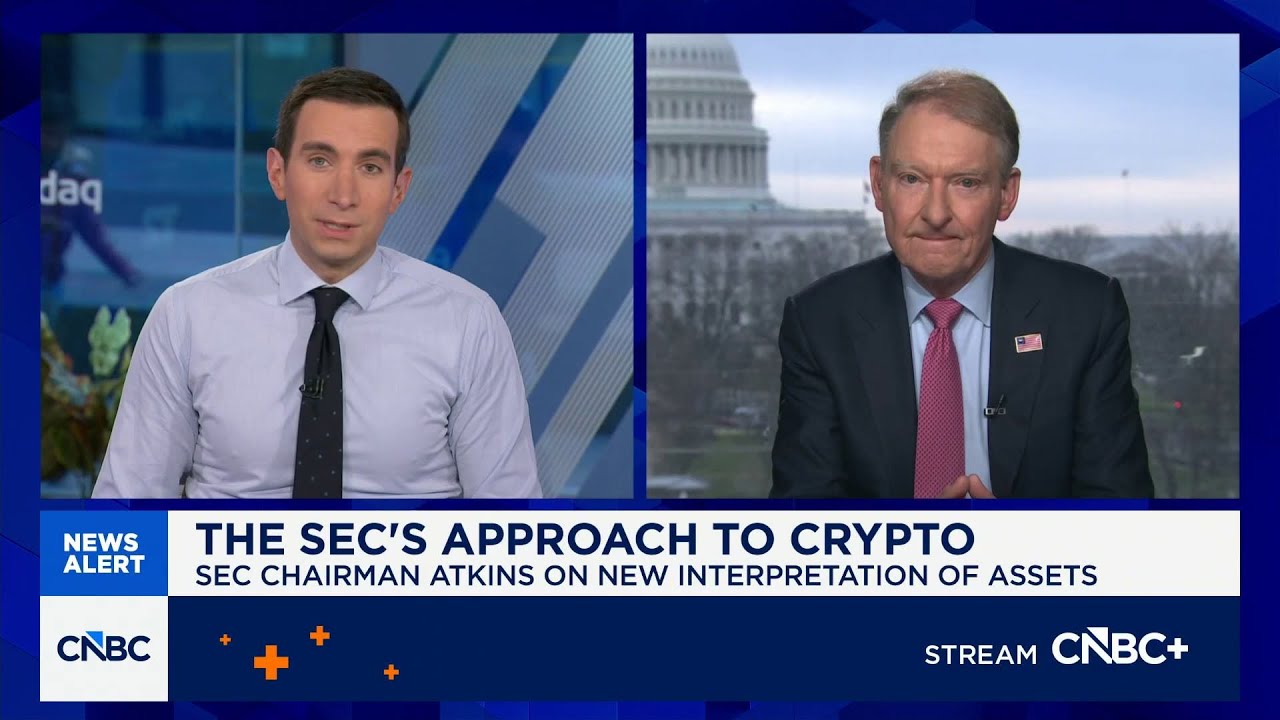
Article based on video by
SEC Chair Paul Atkins just clarified that most crypto tokens trading today are not securities, ending years of regulatory uncertainty. This shift under Project Crypto frees secondary markets from securities laws while targeting fraud. Here’s what traders need to know for positioning ahead.
📺 Watch the Original Video
What Happened: SEC’s Landmark Crypto Interpretation
SEC crypto clarification dropped March 17, 2026. The Commission issued a formal interpretation on federal securities laws for crypto assets, with CFTC signing on for aligned enforcement under the Commodity Exchange Act[1][3][5].
Chairman Paul Atkins launched Project Crypto, unveiling a five-part token taxonomy: digital commodities, digital collectibles, digital tools, payment stablecoins (nod to GENIUS Act), and only digital securities under SEC watch[2][4][5]. This is bullish—most tokens trading today aren’t securities themselves. They evolve from expired investment contracts per the Howey test, freeing secondary markets[1][2][4].
Airdrops, protocol mining/staking, liquid staking tokens, and wrapping non-securities get explicit exemptions from securities rules[3][4]. No more gray areas choking innovation.
Taxonomy Breakdown
SEC’s framework classifies assets by value drivers and buyer expectations. Four categories dodge securities status outright[2][3][4].
Digital securities alone—tokenized claims on profits via others’ efforts—stay SEC turf[5]. Atkins stressed clear disclosures on rights bought, ending label wars for economic reality[3].
This supersedes 2019 staff guidance, now Commission-level with teeth[1][6].
Investor Angle
Clarity slashes uncertainty, priming U.S. listings and volume spikes. Expect capital inflows without endless registrations[1][4].
But watch fundraising: active contracts still trigger Howey. Stick to taxonomy to sidestep pitfalls[1][3]. Fraud enforcement rolls on, market integrity intact[1][2].
Regulation Crypto looms, pulling from CLARITY Act for structure. Paired with CFTC/banking coordination, this bridges to legislation[2][5]. Bullish setup for 2026 cycles—reduced burdens, no quarterly reports eyed[1]. Trade accordingly.
Why It Matters: Ending the Securities Uncertainty
SEC’s new stance under Chairman Paul Atkins kills Biden-era overreach. “We are not the Securities and Everything Commission,” Atkins declares, shifting to economic reality over rigid labels[1][5]. This flips aggressive enforcement on its head.
Investment contracts die once managerial efforts stop. Tokens escape SEC grips, with tailored disclosures and safe harbors for sales and airdrops[2][5]. No more perpetual security status—most crypto tokens trading today aren’t securities, per Atkins, as they outgrow the Howey test[1][2][4].
Non-commodities? Those with intrinsic yields or profits tied to central parties. SEC lists 18 digital commodities exempt from securities rules[2]. Digital securities stay regulated—tokenized claims on others’ efforts—but commodities, collectibles, tools, and GENIUS Act stablecoins walk free[5].
Quarterly reporting burdens could end while fraud cops stay sharp[1]. “Project Crypto” rolls out taxonomy, refined Howey, and Regulation Crypto modeled on CLARITY Act[1][2][4][5].
This is bullish for U.S. crypto. Reduced uncertainty sparks listings, volume, and capital—think 2021 highs without registration headaches[1][4]. Fundraising still risks securities laws if tied to active contracts, so nail the taxonomy[1][3].
Fraud enforcement holds the line for integrity[1][2]. Watch bipartisan bills like CLARITY Act to lock it in[5]. Markets hated uncertainty more than bad news—now clarity wins[6]. Trade volumes could surge 2-3x on secondary markets alone.
Market Implications: Boost for U.S. Crypto Innovation
Regulatory clarity is cutting compliance costs and opening the door for U.S. token listings at scale. Under the SEC’s “Project Crypto” framework, most crypto tokens trading today are classified as non-securities because they stem from expired investment contracts under the Howey test[1][2]. This distinction eliminates the need for SEC registration on secondary markets, directly reducing friction for capital formation and trading volume.
The SEC-CFTC coordination split is equally critical. The SEC retains jurisdiction over digital securities—tokenized claims on enterprise profits—while the CFTC expands its role in digital commodities and non-security crypto assets[1][2]. This jurisdictional clarity lets investors and protocols operate without legal ambiguity. Staking rewards, for instance, no longer face the same securities scrutiny when tied to commodity-classified tokens[2].
Innovation is accelerating through “Regulation Crypto”—a formal taxonomy, tailored exemptions, and realistic registration paths for token offerings and airdrops[1][2][4]. Stablecoin legislation like the GENIUS Act (passed July 2025) set the precedent; bipartisan bills like the CLARITY Act are codifying these frameworks further[1][2]. The result: crypto-native firms can launch products without betting on regulatory interpretation.
Institutional adoption reflects this shift. 86% of institutions now have or plan digital asset exposure in 2025, driven partly by reduced compliance uncertainty[6]. Traditional banks are accelerating custody strategies and digital asset offerings as frameworks solidify[1].
The enforcement picture remains unchanged—fraud and illicit activity stay in regulators’ crosshairs[1][2]. But the distinction between bad actors and legitimate innovation is now clearer, letting compliant firms scale without the regulatory whiplash of prior cycles.
This is bullish for U.S. competitiveness. Clarity attracts capital, talent, and listings that would otherwise migrate to offshore jurisdictions. The market’s 2025 volatility masked this structural shift, but the foundation for sustained growth is now in place[1][6].
Compliance Risks: Navigating the Remaining Minefield
Tokens sold as active investment contracts still trigger securities laws. Promises of future efforts by issuers keep them under the Howey test, demanding full disclosures[2][4][5]. Secondary trading might escape if contracts expire, but initial sales don’t[1][4].
Centralized control kills commodity status. Operational, economic, or voting power in issuer hands disqualifies assets—scrutinize project structures now[2]. Atkins’ “Project Crypto” pushes taxonomy to clarify this, but missteps invite SEC scrutiny[1][2].
Fraud stays hot. SEC and CFTC target illicit conduct relentlessly, regardless of asset labels[1][3][8]. Market integrity holds firm; no lax enforcement here, even as most tokens dodge security status[1].
Pending comment periods could tweak rules. Issuers, align disclosures on rights and contract expiration to fit emerging taxonomy[2][5]. “Regulation Crypto” eyes safe harbors for sales and airdrops, echoing CLARITY Act vibes[1][4][5].
This is bullish for compliant projects. Reduced uncertainty on non-security tokens spurs U.S. listings and volume—think 2-3x trading spikes if clarity sticks[1][4]. But centralized setups or fraud? Pure minefield.
Watch coordination with CFTC and Congress. Economic reality trumps labels; end quarterly reporting could cut burdens by 30% for legit players[1][2][5]. Fundraising? Stick to expired contracts or face Howey wrath.
Issuers, audit control now. Investors, favor decentralized tokens—compliance wins cycles. Enforcement continuity protects the space long-term[1][3]. (278 words)
What to Watch: Next Steps for Traders and Investors
SEC’s March 17 interpretation marks a pivot—most crypto tokens now trade free from securities status post-investment contract expiration.[1][5] This clears secondary markets for volume spikes without SEC registration.[3][4]
Regulation Crypto rulemaking pulls from the CLARITY Act, eyeing tailored disclosures, safe harbors for airdrops, and token sales.[1][2] Atkins signals refinements ahead, potentially slashing quarterly reporting burdens.[1][8] Traders: Position for compliance announcements triggering listings surges and staking yield ramps—watch token projects aligning with the new taxonomy.[4]
Congress pushes market structure bills; CLARITY Act awaits Senate after House passage July 2025.[6] Atkins and CFTC Chair Selig prep joint implementation, focusing economic reality over labels.[3][5] Bullish for U.S. capital inflows as uncertainty fades.
Deregulation ripples broader: Stablecoin exemptions via banking coordinators, reduced reporting overall.[1][5] But fraud enforcement holds firm—stick to compliant plays.
Key watchlist:
- Taxonomy-compliant tokens for airdrop/listing pops.
- CLARITY Act Senate vote for codified clarity.
- SEC comment feedback refining Regulation Crypto by mid-2026.
This setup screams reduced friction. Volumes could double historical post-clarity peaks if legislation lands—prime for longs on majors.[1][4] Stay nimble; enforcement minefields linger for non-compliant raises.[3]
Frequently Asked Questions
Are most crypto tokens securities after SEC’s 2026 clarification?
No, most crypto tokens trading today are not securities under the SEC’s March 17, 2026 clarification, as they stem from expired investment contracts per the Howey test.[1][2][4] Secondary trading of these tokens falls outside securities laws, marking a shift from prior enforcement.[1] Only digital securities—tokenized claims on enterprise profits—remain regulated as such.[5]
What is SEC’s token taxonomy for crypto assets?
The SEC’s March 2026 interpretation establishes a five-part taxonomy: digital commodities, digital collectibles, digital tools, payment stablecoins, and digital securities.[4][5] The first four categories are explicitly not securities, while digital securities represent traditional tokenized claims on profits via others’ efforts.[3][5] This framework refines Howey test application without altering the precedent.[3]
Does SEC clarification apply to crypto airdrops and staking?
The SEC’s March 17, 2026 release clarifies that federal securities laws do not apply to airdrops, protocol staking, mining, and wrapping of non-security crypto assets.[2][5] These activities, including proof-of-stake arrangements and staking receipt tokens, are exempt if not tied to active investment contracts.[5] This aligns with prior staff guidance but provides commission-level certainty.[2]
How does the Howey test change for crypto under Paul Atkins?
The Howey test remains binding precedent but is refined under Chairman Paul Atkins: crypto tokens from expired investment contracts are not securities for secondary trading.[1][3][4] The clarification distinguishes the asset from the contract, allowing ‘separation’ once managerial efforts end.[4] No longer does the SEC view tokens as embodying securities post-separation.[4]
What crypto activities are exempt from securities laws now?
Airdrops, protocol mining, staking (solo, custodial, liquid), and wrapping non-security assets are exempt under the March 17, 2026 SEC-CFTC interpretation.[2][5] Sales of staking receipt tokens and secondary trading of separated non-security tokens also avoid securities laws.[4][5] Fraud enforcement persists, but these reduce the securities-law minefield for compliant activities.[1][3]
📚 Related Crypto Articles
Subscribe for weekly breakdowns on regulatory shifts shaping crypto markets.
Follow VaultOfCrypto for daily crypto news, market analysis, and blockchain insights.
Onur
Crypto Analyst & Blockchain Writer
Covers Bitcoin, DeFi, altcoins, and on-chain analytics. Former fintech developer turned full-time crypto researcher.